
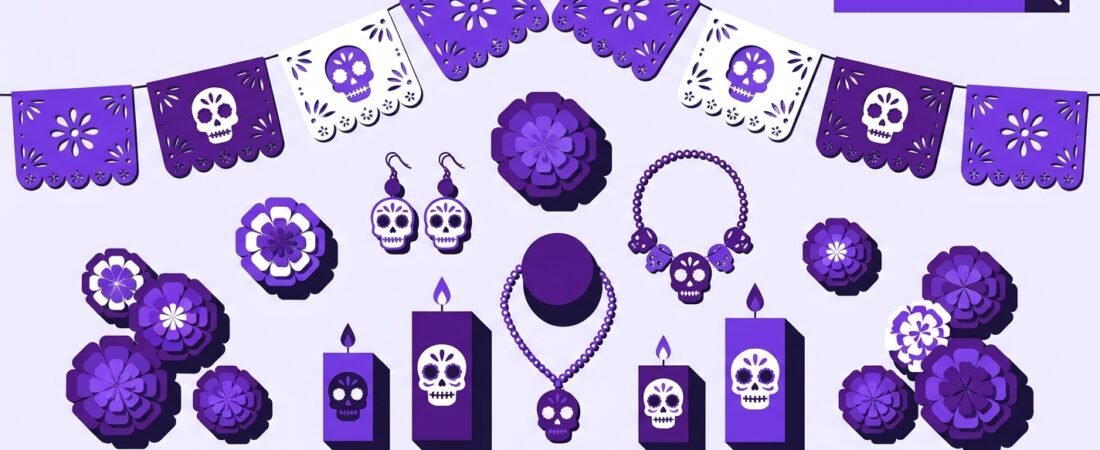
Dia de los Muertos runs November 1–2, a week after Halloween ends. On Etsy, the two events also run on separate search tracks for most of the fall, and shops that fold one into the other tend to miss both.
Never Miss a Craft-Seller Story
Daily updates on marketplace news, seller tactics, and more, straight to your inbox.
Table of Contents
- Introduction
- Why “Halloween” Tags Don’t Cover This Category
- How Dia de los Muertos Search Actually Behaves
- How to Build a Dia de los Muertos Keyword Set
- Common Mistakes That Cost Sellers Visibility
- Tools for Tracking This Search Pattern
- A Worked Example
- Frequently Asked Questions
- Key Takeaways
- The Bottom Line
Introduction
Most shop owners who sell skull-motif or fall-themed goods lump Dia de los Muertos into their general Halloween tags and call it done. That approach leaves a specific, recurring block of search traffic sitting on the table every year.
This guide breaks down how Dia de los Muertos search behaves differently from Halloween search on Etsy, using UNESCO’s own description of the holiday’s cultural status, general Etsy search mechanics documented in the Etsy Seller Handbook, and seasonal search-pattern tracking this site does across shop dashboards it follows.
Here’s the specific split, and what to change in your titles and tags to catch it.
Why “Halloween” Tags Don’t Cover This Category
Most sellers treat Dia de los Muertos as a Halloween sub-style: a skull print, a marigold color palette, a spookier version of an October listing. That framing misses the holiday’s actual timing and meaning, and it also misses how a specific segment of buyers search for it.
Dia de los Muertos, or Day of the Dead, is a Mexican and Indigenous tradition honoring deceased family members, observed November 1–2. UNESCO inscribed the tradition on its Representative List of the Intangible Cultural Heritage of Humanity in 2008, describing it as a living ritual tied to specific families, altars, and remembrance practices, not a costume theme. That distinction matters for search, not just for cultural accuracy: buyers looking for ofrenda (altar) pieces, papel picado, or cempasúchil (marigold) motifs are often searching for something specific and meaningful to them, not a generic “spooky skull” product.
A listing tagged only “halloween skull” or “spooky decor” won’t surface for that buyer, even if the product itself would suit their ofrenda perfectly. The keyword gap runs both directions: buyers searching Dia de los Muertos terms skip past Halloween-tagged listings, and buyers searching Halloween terms aren’t necessarily looking for Day of the Dead imagery either.
It’s a similar blind spot to what we found covering the fall restocking and repricing window: sellers plan around the big, obvious date and miss the smaller, distinct window sitting right next to it.
How Dia de los Muertos Search Actually Behaves
Dia de los Muertos search on Etsy holds its own volume through late October and into early November, running past the date most Halloween search starts dropping off. Halloween-specific terms typically peak in the final week of October and fall sharply once the day itself passes. Dia de los Muertos search, by contrast, stays active through November 2 and into the days after, since gift-giving, altar-building, and gathering-related purchases often happen close to or even after the date itself.
Google Trends data for “dia de los muertos” shows this pattern reliably year over year: a rise beginning in mid-October, a peak in the final days of October and first two days of November, and a longer tail than most Halloween search terms show. Sellers who pull their Dia de los Muertos listings down on October 31 alongside their Halloween inventory are cutting off demand that hasn’t peaked yet.
The product categories differ too. Buyers searching Dia de los Muertos terms are more often looking for:
- Calavera (sugar skull) art, jewelry, and apparel with traditional floral or papel picado detailing
- Ofrenda and altar decor: candle holders, photo frames, marigold garlands
- Personalized memorial pieces: a name, a photo, or a date incorporated into the design
- Papel picado banners and party or gathering decor for Dia de los Muertos-specific events
Compare that to the top Halloween search categories covered in our Halloween keyword guide, namely costumes, trick-or-treat accessories, and horror-themed decor, and the overlap is smaller than most sellers assume. A shop that only tags “skull” and “fall decor” is missing the memorial and personalization angle almost entirely.
How to Build a Dia de los Muertos Keyword Set
Here’s how to build a keyword set for this category instead of folding it into your Halloween tags.
Step 1: Separate the listing, not just the tag
What: Give Dia de los Muertos products their own listing rather than a shared “Halloween/Day of the Dead” listing.
Why: Etsy’s search algorithm weighs how closely a listing’s title, tags, and category match a buyer’s exact query. A listing trying to serve both audiences dilutes relevance for both.
How: If you currently have one skull-print item tagged for both audiences, split it into two listings with different primary photos, titles, and descriptions, even if the physical product is close to identical.
Step 2: Lead the title with the specific term
What: Use “Dia de los Muertos” or “Day of the Dead” as one of the first words in the title, not buried after generic terms.
Why: Etsy currently allows up to 140 characters in a listing title, and the Seller Handbook has repeatedly emphasized that earlier keyword placement carries more search weight than keywords placed later in the string.
How: Instead of “Skull Halloween Decor Fall Sign,” write “Dia de los Muertos Ofrenda Sign, Day of the Dead Altar Decor.” Include both the Spanish and English phrasing. Sellers report meaningful search volume under both terms.
Step 3: Use tags for the specific sub-category, not the general theme
What: Fill your tag slots with terms like “calavera art,” “ofrenda decor,” “papel picado banner,” and “memorial gift” rather than repeating “Halloween” or “skull decor” across every slot.
Why: Etsy tags support up to 13 per listing, each up to 20 characters, and duplicating your title keywords in your tags wastes slots that could capture adjacent searches.
How: Audit your current tag list. If more than two or three tags say some version of “Halloween” or “skull,” replace the extras with Dia de los Muertos-specific terms from the list above.
Step 4: Extend your active listing window past October 31
What: Keep Dia de los Muertos listings active, promoted, and stocked through at least November 3–4, instead of pulling them down with your Halloween inventory.
Why: The search data referenced earlier shows demand extending past the date itself, and buyers building an ofrenda sometimes purchase in the days immediately following November 2 for the following year’s use or as a late remembrance gift.
How: If you use Etsy Ads, check your November 1–5 budget separately rather than assuming the season ends with Halloween. Scheduling this kind of overlapping seasonal window is covered in more detail in our September product drop calendar guide.
Step 5: Write descriptions that reflect the tradition accurately
What: Use listing copy that describes the piece’s connection to remembrance, family, or the ofrenda tradition where that connection fits, not generic “spooky season” language.
Why: Buyers searching this category are frequently shopping with intention, sometimes for a specific person or occasion. Copy that treats the product as a costume prop reads as a mismatch and can cost you the sale even if the buyer clicks through.
How: A single added sentence often does it: what the piece is for, and how a buyer might use it as part of an altar, gift, or gathering.
Common Mistakes That Cost Sellers Visibility
Mislabeling costs more visibility than most sellers assume, and it happens in a few repeatable ways.
- Tagging Dia de los Muertos products as “Halloween” only. This is the single most common mistake and the one that costs the most search traffic, since it removes the listing from the specific-term search entirely.
- Pulling listings down on October 31. As covered above, Dia de los Muertos demand extends past that date. Sellers who treat both categories as one seasonal block end their most relevant listings early.
- Using “sugar skull” as the only calavera term. Both terms have real search volume, and buyers use them somewhat differently. “Sugar skull” often skews toward the visual motif alone, while “calavera” and “Dia de los Muertos” skew toward buyers seeking the specific tradition.
- Treating the imagery as interchangeable with generic horror or gothic skull designs. Products marketed this way can end up in front of the wrong buyer, which shows up as lower conversion even when click-through looks fine.
- Skipping accent marks entirely. Etsy’s search handles “Dia de los Muertos” and “Día de los Muertos” similarly in most cases, but including the accented spelling at least once in your description can help match buyers who search that way, particularly on mobile.
Tools for Tracking This Search Pattern
You don’t need a paid tool to track this shift, though a few make it faster:
- Etsy Shop Stats (free, built into every shop): check your search-term report weekly starting in mid-October to see whether Dia de los Muertos terms show up separately from Halloween terms in your own traffic.
- Google Trends (free): useful for confirming the national seasonal curve described above and for checking whether “Dia de los Muertos” or “Day of the Dead” phrasing trends higher in your specific product category.
- eRank or Marmalead (paid, subscription-based): both track Etsy-specific keyword volume and can show search estimates for “dia de los muertos” and “day of the dead” as separate terms from “halloween,” which is useful if you want harder numbers than Shop Stats alone provides.
Whichever tool you use, the goal is the same: confirm the split exists in your own category before you commit listing slots to it. It’s the same discipline that pays off for other overlooked windows, like the Labor Day weekend keyword window covered elsewhere on this site.
A Worked Example
A shop selling laser-cut wood ornaments previously ran a single listing titled “Skull Ornament, Halloween Fall Decor, Gothic Gift” with tags split evenly between Halloween and general fall-decor terms. The listing got clicks through October but a low conversion rate, and traffic dropped to near zero on November 1.
The seller split the listing into two: the original stayed focused on gothic/horror decor, and a new listing went up titled “Dia de los Muertos Calavera Ornament, Day of the Dead Memorial Gift” with tags including “calavera ornament,” “ofrenda gift,” and “memorial keepsake.” The new listing’s description added one line explaining the piece could hold a small photo insert for an ofrenda display.
The new listing’s traffic pattern looked different from the old one almost immediately: it built more slowly through mid-October, but held steady traffic through November 2 rather than dropping off on Halloween night, and its personalization add-on (the photo insert) became the shop’s best-converting upsell in that listing for the first time.
Frequently Asked Questions
Is Dia de los Muertos the same holiday as Halloween?
No. Dia de los Muertos (Day of the Dead) is a Mexican and Indigenous tradition honoring deceased family members, observed November 1–2. Halloween is a separate, earlier holiday with different origins and imagery, even though the two fall close together on the calendar.
What keywords should I use for Dia de los Muertos listings on Etsy?
Lead with “Dia de los Muertos” or “Day of the Dead” in the title, and use tags like “calavera,” “ofrenda decor,” “papel picado,” and “memorial gift” rather than relying on generic “Halloween” or “skull decor” terms alone.
Should I tag a product as both “Halloween” and “Dia de los Muertos”?
It depends on the product. If the design serves both audiences equally well, a shared tag or two can make sense. But leading with only Halloween terms, or splitting tags evenly by default, tends to under-serve both searches. When in doubt, a separate listing usually performs better than a shared one.
When does Dia de los Muertos search start picking up on Etsy?
Search interest typically begins rising in mid-October and peaks in the final days of October through November 2, based on national Google Trends data for the term. Check your own Shop Stats to confirm the pattern in your specific product category.
What’s the difference between “sugar skull” and “calavera” as keywords?
Both have real search volume and often overlap, but they aren’t identical. “Sugar skull” tends to skew toward the visual motif itself, while “calavera” and “Dia de los Muertos” more often reflect buyers specifically seeking the tradition. Using both, where relevant, covers more of the search field.
Do I need to change my titles, or is updating tags enough?
Titles carry more search weight than tags on Etsy, so if you only have time to change one, prioritize the title. But for the strongest results, update both together, since tags let you add specific sub-category terms the title doesn’t have room for.
Should I use accented characters, like “Día,” in my titles and tags?
It’s reasonable to include the accented spelling at least once in your description or a secondary tag, since some buyers search that way, especially on mobile. It isn’t necessary to use it in the primary title if character space is tight.
What if my shop doesn’t specialize in Dia de los Muertos products? Should I still create listings for it?
Only if you can represent the tradition accurately and the product actually fits the category. A rushed, generic listing with mismatched imagery is unlikely to convert well and risks looking dismissive of what the holiday actually represents to buyers who observe it.
How long should I keep Dia de los Muertos listings active?
Based on the search pattern described above, keep listings active and promoted through at least November 3–4, rather than pulling them down alongside Halloween inventory on October 31.
What’s the single most common mistake sellers make with this category?
Tagging Dia de los Muertos products under “Halloween” only, with no separate listing or tag set. It’s the fastest fix on this list and the one most likely to recover missed search traffic.
Do eRank or Marmalead track Dia de los Muertos search volume separately from Halloween?
Yes, both tools generally report keyword volume for specific phrases like “dia de los muertos” and “day of the dead” independently of “halloween,” which makes them useful if you want harder numbers than Etsy’s own Shop Stats provides.
Does this keyword split apply to shops outside the U.S.?
The search pattern described here is based on U.S. Etsy and Google Trends data. Buyers in Mexico and other countries with strong Dia de los Muertos traditions may search differently, so if a meaningful share of your traffic comes from outside the U.S., check your own Shop Stats by region before assuming the same split applies.
Key Takeaways
- Dia de los Muertos and Halloween run on separate search tracks for a meaningful stretch of the fall, even though the dates sit close together.
- Dia de los Muertos search holds through November 2 and slightly after, past the point where most Halloween search drops off.
- Lead titles with “Dia de los Muertos” or “Day of the Dead,” and use tags like “calavera,” “ofrenda,” and “memorial gift” instead of relying on “Halloween” or “skull” alone.
- Split shared Halloween/Dia de los Muertos listings into two where the product supports it: a diluted listing tends to underperform for both searches.
- Keep listings active through at least the first few days of November instead of pulling them down on October 31.
The Bottom Line
Dia de los Muertos deserves its own keyword strategy, not a corner of your Halloween tag list. The search pattern is distinct, the buyer intent is often more specific, and the demand window runs later than most sellers plan for.
Start building your Dia de los Muertos keyword set today by pulling your Shop Stats search-term report and checking whether these terms already show up separately in your own traffic. Then update your titles and tags before the mid-October search rise begins.
Related Articles
- Halloween Keyword Guide: What Buyers Are Searching Right Now: the broader Halloween keyword breakdown this guide splits away from.
- Fall Aesthetic Etsy Keywords: Where Pumpkin Meets Halloween: another case of two search categories overlapping without being identical.
- Halloween Decor Niches: Spooky-Cute vs. Gothic Elegant vs. Kid-Friendly: a related breakdown of how decor sub-styles split buyer search behavior.
About This Research
Dima Makarenko is the Technical Founder of Stable Commerce and a 20-year eCommerce operator who writes Crafts Daily Wire’s daily coverage of Etsy seller tactics, seasonal SEO, and tool reviews.
This article draws on UNESCO’s documentation of Dia de los Muertos as inscribed intangible cultural heritage, Google Trends seasonal search data, Etsy’s own listing mechanics as documented in the Seller Handbook, and Etsy Search Analytics patterns reviewed across active shop dashboards this site tracks for seasonal reporting.
Content reviewed and updated: 2026-08-14
Connect With Us
Questions about how this keyword split shows up in your own shop’s search-term data? Reach out via LinkedIn or Facebook.
Crafts Daily Wire is an independent daily news site for Etsy sellers and is not affiliated with Etsy, Inc. Search-term performance varies by shop, product category, and competition, and no keyword change guarantees a specific ranking or sales outcome. See our Privacy Policy and Terms of Use.
Enjoyed This Story?
Subscribe for daily craft-seller news and tips.